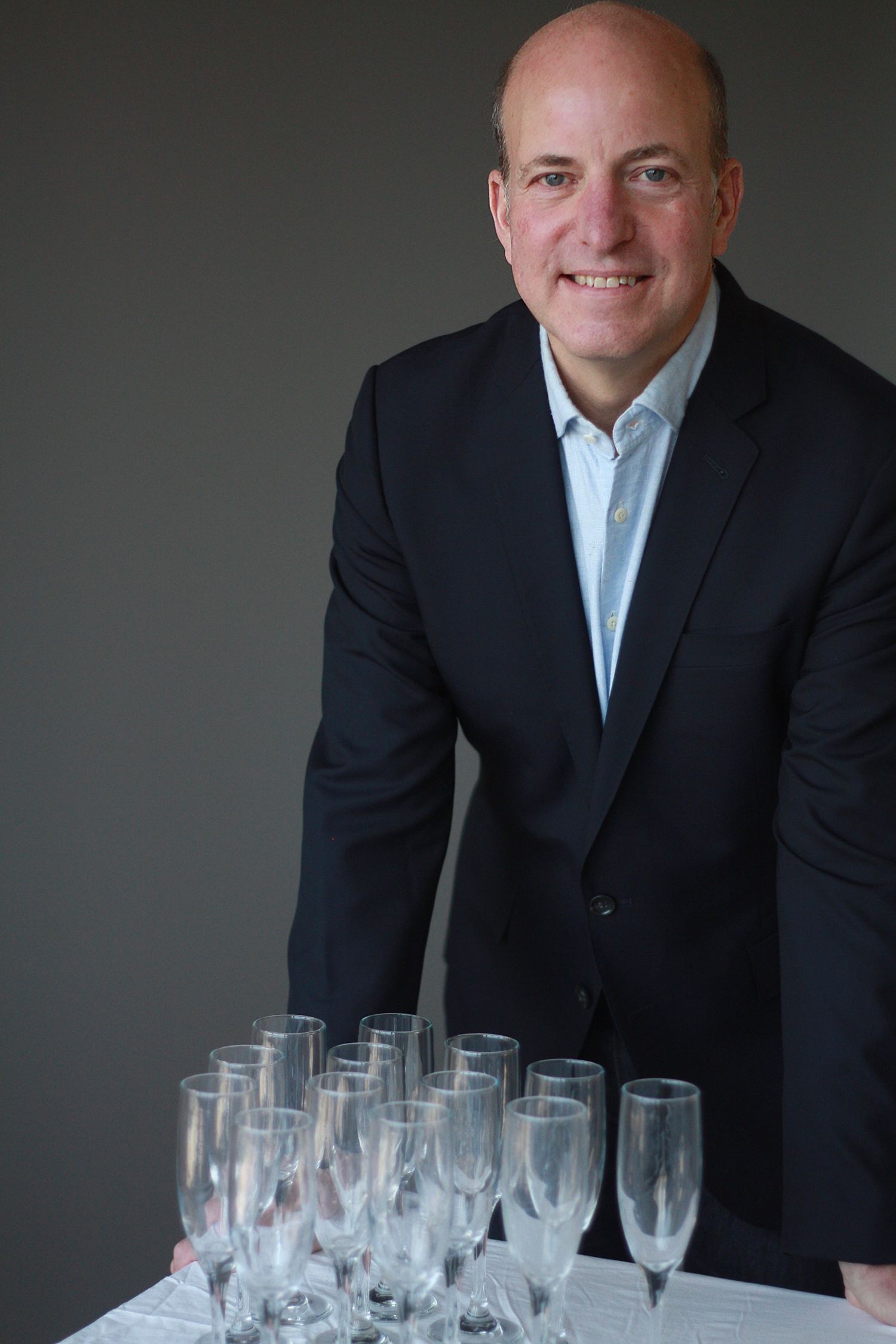
About Alex Prud'homme
I became a writer the old-fashioned way. In 1985 I embarked on a three-month trip to India, Nepal, and Japan, after which I planned to return to the States to study architecture. Only, I didn’t return. I traveled for nearly two years and eventually made my way around the world. Scaling the Himalayas, crossing the USSR on the Trans-Siberian Railway, working as a fisherman in Australia, an English teacher-actor-hostel keeper in Japan, and as a janitor in Paris, I kept a journal. This daily recording of experience eventually led to my career as a writer.
In 1988 I joined New York magazine as a fact-checker. I wrote many short articles and freelanced on the side, producing stories like “Slave,” a New Yorker piece about an irascible soup maven (later made famous by Seinfeld’s “Soup Nazi” episode). In the 1990s I moved to BusinessMonth, where I profiled business leaders, to Time, where I covered national affairs, and to People, where I wrote crime and human-interest stories. In 2001 I joined Tina Brown at Talk magazine, where my article “Should Johnny Paul Penry Die?,” about the debate over executing mentally retarded criminals, was anthologized in The Best American Crime Writing.
In 2003 I co-wrote the book Forewarned, about terrorism and security in the post-9/11 world, with Michael Cherkasky, the CEO of Kroll.
In 2002 Vanity Fair published my article “Investigating ImClone,” which was anthologized in the Best Business Crime Writing anthology. In 2004, I expanded the story into The Cell Game, a book about the intersection of biotech, celebrity, finance, and white-collar crime. I covered Martha Stewart’s trial on charges of insider trading of ImClone stock for TV news shows, and The Cell Game was optioned for a movie.
In 2004 I helped Julia Child write her memoir, My Life in France, about her “favorite years” — 1948-1954 — when she and her husband Paul lived in Paris and Marseille. (Paul was my grandfather’s twin brother; I grew up listening to the Childs’ adventure stories around the dinner table.) In France Julia experienced “a flowering of the soul” and discovered her raison d’etre in cooking. We worked together for eight months, until Julia died in her sleep two days shy of her 92d birthday. I spent another year finishing the book, which Alfred A. Knopf published in 2006. In 2009, it inspired half of Nora Ephron’s film “Julie & Julia,” which starred Meryl Streep, Stanley Tucci, and Amy Adams. I consulted on the script, coached Tucci on playing Paul Child, and was an extra in the movie. The book reached #1 on The New York Times best-seller list.
Shifting my focus to the environment and energy, I wrote The Ripple Effect: the Fate of Freshwater in the Twenty-First Century, published in 2011 by Scribner; and Hydrofracking: What Everyone Needs to Know, published by Oxford University Press in 2013. In 2011, Participant Media produced “Last Call at the Oasis,” a documentary film about the global water crisis, made by Jessica Yu and Elise Pearlstine, and inspired by The Ripple Effect.
In 2014, a decade after writing My Life in France, I circled back to answer a few lingering questions about Julia Child: How did she appear on Public Television in 1963, win her first Emmy and make a documentary about a state dinner at the White House by 1967? What led her to Dan Aykroyd’s “Save the Liver!” skit on “Saturday Night Live,” working with other chefs such as Jacques Pepin, Emeril Lagasse, and Lidia Bastianich, and to the height of her fame on “Good Morning America” in the 1970s and 80s?
I thought I could answer these questions in a magazine article. But I uncovered a hidden history of Julia in midlife, a dynamic period when she dropped the French Chef persona, began to perform as Julia Child, embraced recipes from around the world, contended with health issues, and fashioned herself into America’s first true celebrity chef. Inspired by Julia’s self-reinvention, I wrote The French Chef in America: Julia Child’s Second Act. (I also narrated the audiobook.) It is dedicated to Julia’s lifelong editor, Judith B. Jones, and Knopf published it in 2016.
That book continues to resonate. In 2022, I participated in the documentary “Julia,” by filmmakers Betsy West and Julie Cohen (best known for RBG). And I was a Consulting Producer on the acclaimed Warner/ HBOMax streaming series “Julia.” Both “Julia” projects drew from The French Chef in America.
In 2017, Thames & Hudson published France is a Feast: Paul and Julia Child’s Photographic Journey, a book of Paul Child’s photographs taken in France in 1948-1954. I wrote the text, which tells their love story from Paul’s perspective, while Katie Pratt edited Paul’s evocative black-and-white images.
In 2023, Knopf published Dinner with the President: Food, Politics, and a History of Breaking Bread at the White House. This book traces the central role food has played in American political history, from George Washington starving at Valley Forge to FDR’s terrapin soup, Reagan’s jellybeans, Trump’s burgers, and Kamala Harris’s masala dosas. The book looks at the American story through a culinary lens, and asks: how did we get from there (hoecakes, squirrel stew) to here (veganism, artificial meat)? What does that arc tell us about the food of politics and the politics of food, our leaders, and how the nation’s diet reflects its evolution? Dinner with the President includes sixteen pages of color illustrations and ten presidential recipes.